

What Happens if You’re Hit by a Driver Who Fell Asleep at the Wheel?
Click For Free Consultation
Legally Reviewed By: Robert M. Knowles
Attorney & Partner At Knowles Law Firm
Legally Reviewed by Robert M. Knowles, Jr. on July 29, 2026
If you were hit by a driver who fell asleep at the wheel, you may be entitled to recover compensation for your injuries, lost income, and other losses. Drowsy driving is treated as a form of negligence under Nebraska law, meaning the driver failed to meet the standard of care that every motorist owes to others on the road. When fatigue causes a driver to drift out of their lane, run off the road, or crash into another vehicle, the resulting harm can be severe, and victims often face significant medical bills, missed work, and a long recovery. Proving that the other driver was actually fatigued can be more difficult than proving fault in a typical collision, since fatigue does not show up on a breath test or in a toxicology report the way alcohol or drugs would. That difference does not mean a claim is impossible. It means the evidence has to come from other sources, which is why building a strong case early matters.
When situations like these arise, having experienced legal representation can make a meaningful difference in how your claim is handled. For over 55 years, the lawyers at Knowles Law Firm have helped injured Nebraskans pursue accountability after serious car accidents, and our team has experience negotiating with insurance companies on behalf of clients hurt by negligent drivers. This guide explains how Nebraska law treats drowsy driving crashes, what evidence typically supports a claim, and what steps you can take to protect your rights after a collision.
Why Drowsy Driving Is Considered Negligence Under Nebraska Law
All drivers have a legal duty to operate their vehicles safely, which includes staying alert enough to react to hazards, maintain their lane, and stop when needed. Choosing to get behind the wheel while dangerously fatigued, despite knowing the risk, breaches that duty of care. When a drowsy driver causes a collision, their failure to exercise reasonable care forms the foundation of a negligence claim, and Nebraska law allows injured victims to pursue compensation for the resulting harm. The legal theory is the same one that applies to any other negligent driver, but the practical challenge of proving fatigue often makes these claims more complex to build.
Proving a Driver Fell Asleep After a Crash
One of the biggest challenges in these cases is establishing that fatigue caused the crash, since a driver rarely admits to falling asleep at the scene. Evidence that can support a drowsy driving claim includes police reports noting the driver’s condition, witness statements describing erratic or nonexistent braking, and event data recorder information showing no attempt to slow down before impact. Cell phone records, work schedules, and travel logs can also help demonstrate that the driver had been awake for an unusually long stretch of time. For crashes involving semi-trucks or other commercial vehicles, electronic logging device data can reveal whether the driver exceeded federal hours-of-service limits before the collision. A thorough investigation is often necessary to uncover these details and build a case that holds the at-fault driver accountable.
How Dangerous Is Drowsy Driving?
Falling asleep behind the wheel is only the most extreme outcome of driver fatigue. Long before a driver’s eyes close, drowsiness slows reaction time, narrows attention, and impairs judgment in ways that can resemble the effects of alcohol. Drowsy-driving crashes most often happen late at night or in the early morning hours, and again in the mid-afternoon, when the body’s natural circadian rhythm dips. These crashes also tend to share a troubling pattern: a single vehicle drifts off the road at highway speed with no evidence that the driver braked or attempted to avoid the collision. Because the impact often happens at full speed, the likelihood of catastrophic injury increases for anyone in the vehicle that gets struck, along with anyone riding with the fatigued driver.
Warning Signs That a Driver Is Too Drowsy to Be Behind the Wheel
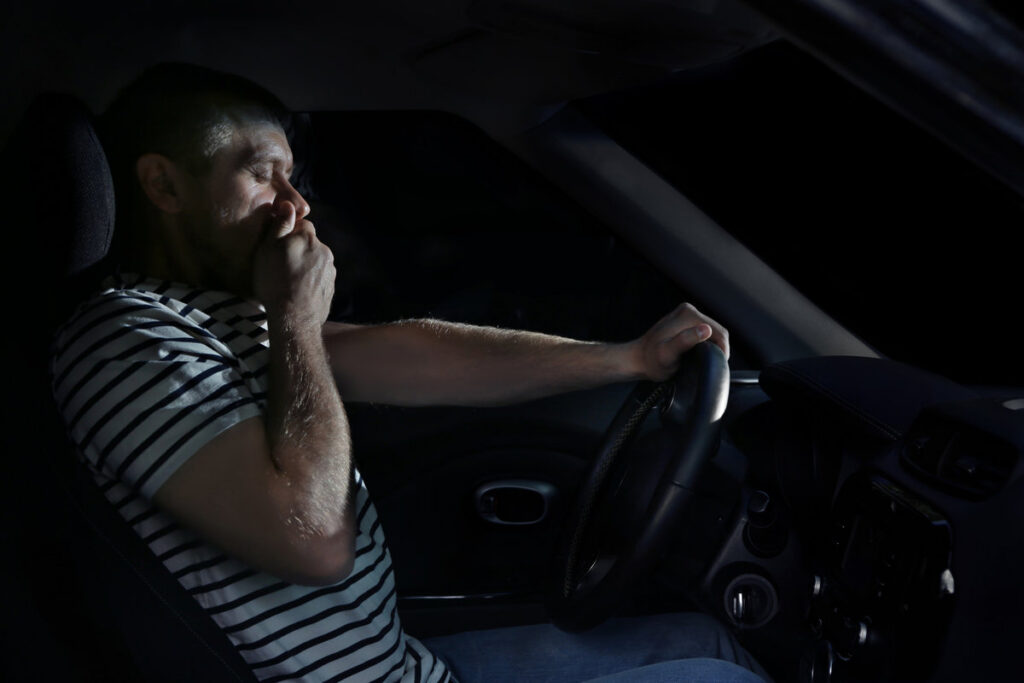
Fatigue rarely arrives without warning, even though a drowsy driver may ignore or fail to notice the signs. Frequent yawning, heavy eyelids, difficulty focusing on the road, missed exits or turns, and drifting within or out of a lane are all recognized indicators that a driver should pull over and rest rather than continue on. Drivers who have gone roughly eighteen to twenty hours without sleep can experience reaction times and judgment comparable to driving with an illegal blood alcohol concentration, which is part of why drowsy driving is treated as seriously as a drunk driving accident in personal injury claims. Both involve a driver who was capable of avoiding the crash through a simple choice, whether that choice was to pull over and rest or to call a taxi instead of getting behind the wheel, and both can leave victims facing injuries that take months or years to fully resolve.
Types of Crashes Caused by Drowsy Drivers
Because a nodding or sleeping driver typically loses the ability to brake, steer, or react at all, drowsy driving crashes tend to look different from an ordinary fender bender. A driver who drifts across the centerline before losing control entirely often causes a head-on collision, among the most dangerous types of crash on Nebraska roads. Other common patterns include single-vehicle lane departures where a car runs off the shoulder or into a ditch, rear-end collisions where a fatigued driver fails to notice stopped or slowing traffic ahead, and side-impact crashes at intersections where a driver never applied the brakes. Because these crashes usually occur at or near full speed, with no evasive action taken, the resulting forces transferred to every occupant are often significantly greater than in a collision where at least one driver attempted to avoid impact.
Common Causes and Risk Factors for Drowsy Driving
Fatigue-related crashes are not limited to any one type of driver, but certain groups face a higher risk. Commercial truck drivers and other professional drivers who spend long hours on the road can be especially prone to fatigue if they push past safe limits or violate the federal hours-of-service rules meant to prevent overwork. Shift workers whose sleep schedules are disrupted by rotating or overnight hours, people with untreated sleep disorders such as sleep apnea, and drivers taking medications that cause drowsiness also face an elevated risk. Younger drivers, who may underestimate how quickly fatigue can set in, and drivers on long, monotonous highway stretches through rural Nebraska round out the higher-risk categories. Regardless of the reason a driver became fatigued, the choice to keep driving instead of stopping to rest remains within that driver’s control, which is why Nebraska law holds a drowsy driver accountable in much the same way it holds a distracted or impaired driver accountable. If the fatigued driver in your crash was operating a semi-truck or other commercial vehicle, your case may raise additional issues, since commercial vehicle accidents often involve separate insurance policies, trucking company liability, and federal safety regulations that do not apply to an ordinary passenger vehicle collision.
Who Can Be Held Liable for a Drowsy Driving Crash
In many drowsy driving cases, the driver who fell asleep is not the only party who may share responsibility. If the fatigued driver was working at the time of the crash, such as a delivery driver, rideshare driver, or commercial trucker running behind schedule, their employer may also bear liability under a legal principle known as respondeat superior, which holds employers responsible for the negligent acts of employees performed within the scope of their job duties. Trucking companies in particular have a duty to help enforce federal hours-of-service limits and can face liability if dispatchers pressured a driver to stay on the road past safe limits or failed to monitor compliance with rest requirements. In rare cases, a vehicle manufacturer may also share responsibility if a malfunctioning lane-departure or automatic braking system failed to activate as designed. Identifying every potentially liable party matters because it can affect how much insurance coverage is available to compensate you for your losses. An investigation that looks only at the driver, rather than the full picture of how and why the crash happened, can leave meaningful compensation on the table.
Injuries Common in Drowsy Driving Accidents
Crashes caused by drowsy drivers tend to be severe because the at-fault driver often makes no attempt to brake or swerve before impact, and a full-speed impact transfers significantly more force to everyone involved. As a result, victims frequently sustain serious injuries, including traumatic brain injuries, spinal cord and spine injuries, broken bones, internal organ damage, and lacerations. These injuries can require extensive medical treatment, ongoing rehabilitation, and significant time away from work, and some victims face long-term or permanent disability as a result. In the most serious cases, these crashes can be fatal, giving surviving family members grounds to pursue a wrongful death claim against the driver responsible.
What Damages Can You Recover After a Drowsy Driving Accident
Nebraska law allows injury victims to seek compensation for both economic and non-economic losses after a crash caused by a drowsy driver. The types of damages typically available in a claim like this include:
- Medical expenses: Past and future costs for hospital care, surgery, physical therapy, and rehabilitation
- Lost wages: Income lost during recovery, plus any reduction in future earning capacity if the injury affects your ability to work long-term
- Property damage: The cost to repair or replace your vehicle and any other property damaged in the crash
- Pain and suffering: Compensation for the physical pain and emotional toll caused by your injuries
The value of a claim depends on a range of factors, including the severity of your injuries, the strength of the evidence, and how clearly liability can be established. You can learn more about how these figures are determined by reviewing car accident settlement amounts and what typically affects the outcome of a claim.
Steps to Take After Being Hit by a Drowsy Driver
What you do in the hours and days after a crash can affect both your health and your ability to pursue compensation later. If you are able to safely do so after a collision with a driver you believe fell asleep at the wheel, seek medical attention right away, even if your injuries seem minor, since some symptoms of a serious injury do not appear immediately. Call the police and make sure the responding officer documents the other driver’s statements and condition at the scene. Photograph both vehicles, the road, and any skid marks, or the lack of them, before the scene changes. Get contact information from anyone who witnessed the crash, since their account may later help confirm that the other driver never braked. Avoid giving a recorded statement to any insurance adjuster, including your own, until you understand the full extent of your injuries, since early statements are sometimes used later to minimize a claim. Keep copies of any medical records, repair estimates, and correspondence with insurance companies in one place, as these documents often become important later in the process.
How Common Is Drowsy Driving? What the Research Shows
Because fatigue leaves no chemical trace the way alcohol does, researchers generally agree that official statistics understate the true scope of the problem. The National Highway Traffic Safety Administration estimates that drowsy driving contributes to roughly 91,000 police-reported crashes, 50,000 injuries, and hundreds of fatalities each year, according to a 2024 research brief from the AAA Foundation for Traffic Safety. That same research, which modeled drowsiness using in-depth crash investigation data rather than relying only on police reports, estimated that drowsy driving was a factor in approximately 17.6 percent of all fatal crashes nationwide between 2017 and 2021, a figure far higher than official police-reported totals suggest. Long stretches of interstate highway, agricultural work schedules, and commercial trucking routes through Nebraska can all contribute to the same fatigue patterns the research describes, particularly on overnight and early morning trips.
How Nebraska’s Statute of Limitations Affects Your Claim
In Nebraska, injury victims generally have four years from the date of the accident to file a personal injury lawsuit against a negligent driver, under Nebraska Revised Statute 25-207. If the crash was fatal, Nebraska law gives surviving family members a shorter window, generally two years from the date of death, to bring a wrongful death claim under Nebraska Revised Statute 30-810. While four years may seem like a lengthy amount of time, beginning the legal process early is still important. Evidence can deteriorate, witnesses’ memories fade, and records such as cell phone data or electronic logging device information may become harder to obtain the longer you wait. Acting promptly gives your legal team the best opportunity to investigate the crash and build a strong case before the applicable deadline passes.
How an Omaha Car Accident Attorney Can Help Your Claim
Drowsy driving cases often come down to circumstantial evidence rather than a clear admission, which makes early investigation especially important. An attorney can help gather event data recorder information, cell phone records, and witness statements before they become harder to obtain, and can communicate with insurance adjusters on your behalf so you are not pressured into an early settlement that undervalues your losses. Understanding what a car accident lawyer does at each stage of a claim, from investigation through negotiation and, if necessary, litigation, can help you make informed decisions about your case. If liability is disputed or the fatigued driver was operating a commercial vehicle, having an attorney manage that complexity from the outset can help protect your right to recover the compensation Nebraska law allows. This is especially true when more than one party, such as a driver and an employer, may share fault, since sorting out which insurance policies apply and how much coverage exists can take time that an unrepresented accident victim may not have before deadlines approach.
Frequently Asked Questions About Drowsy Driving Accidents in Nebraska
Do I Have a Case if I Was Hit by a Driver Who Fell Asleep at the Wheel?
In most situations, yes. Falling asleep at the wheel is considered a form of negligence under Nebraska law because every driver has a duty to stay alert enough to operate their vehicle safely. If you can show that the other driver was fatigued and that this fatigue caused the crash, you may have grounds to pursue a personal injury claim for your medical expenses, lost income, and other losses. An attorney can review the details of your crash and help you understand whether your case meets these requirements.
How Long Do I Have to File a Claim After a Nebraska Drowsy Driving Accident?
Nebraska generally gives injury victims four years from the date of the crash to file a personal injury lawsuit under Nebraska Revised Statute 25-207. If the crash resulted in a death, surviving family members generally have two years from the date of death to file a wrongful death claim under Nebraska Revised Statute 30-810. Waiting too long can make it harder to gather evidence, so it is best to speak with an attorney as soon as possible after a crash.
How Much Does It Cost to Hire a Drowsy Driving Accident Attorney in Nebraska?
Many personal injury attorneys, including the team at Knowles Law Firm, handle car accident cases on a contingency fee basis. This generally means you pay no upfront legal fees, and the attorney is only paid a percentage of your recovery if your case results in a settlement or verdict in your favor. This arrangement allows injured Nebraskans to pursue legal help without worrying about the cost of representation while they focus on recovering from their injuries.
Can My Family File a Claim if a Loved One Died in a Crash Caused by a Drowsy Driver?
Yes. When a drowsy driving crash results in a death, Nebraska law allows the personal representative of the deceased person’s estate to file a wrongful death claim on behalf of the surviving spouse and next of kin. This claim can seek compensation for the pecuniary losses the family experienced because of the death. Because Nebraska’s wrongful death statute of limitations is shorter than the deadline for standard injury claims, families should speak with an attorney promptly after losing a family member in this type of crash.
Are Drowsy Driving Accidents a Common Problem on Nebraska Roads?
Drowsy driving is a nationwide problem, and Nebraska is no exception. Long stretches of interstate highway, agricultural work schedules, and commercial trucking routes through the state can all contribute to driver fatigue, particularly on overnight and early morning trips. Research from the AAA Foundation for Traffic Safety suggests drowsy driving contributes to a far larger share of fatal crashes nationwide than official police reports capture, since fatigue rarely leaves the kind of physical evidence associated with drunk or distracted driving.
Is Drowsy Driving Treated the Same as Drunk Driving Under Nebraska Law?
Drowsy driving and drunk driving are prosecuted under different criminal statutes, but they are treated similarly in a personal injury claim because both involve a driver who breached the duty to operate a vehicle safely. Research has compared the reaction times and impaired judgment of a severely fatigued driver to those of a driver over the legal blood alcohol limit. In a civil claim, that comparison can help demonstrate how serious and foreseeable the risk of harm was, which can support a negligence claim even without a positive blood alcohol test.
Drowsy driving crashes can be some of the hardest cases to prove, since fatigue leaves no breathalyzer result and often goes unmentioned in a police report. Knowles Law Firm has represented injured Nebraskans for over 55 years, and our attorneys, including Robert M. Knowles, Jr., bring firsthand knowledge of how Omaha-area courts and insurance companies handle car accident claims. Our team looks closely at the circumstances of each crash, from event data recorder information to work schedules and cell phone records, to help build the strongest case possible on your behalf. We handle car accident cases on a contingency fee basis, so you do not pay legal fees out of pocket while your claim is being pursued.
You do not have to sort through an insurance claim or a potential lawsuit on your own after being hit by a driver who fell asleep at the wheel. Reach out to Knowles Law Firm today to discuss what happened and learn more about the options that may be available to you.
About the Attorney
Personal Injury Attorney
Robert M. Knowles, Jr. is a personal injury attorney at Knowles Law Firm, a family-run practice that has served injured Nebraskans for more than 50 years. He earned his law degree from Creighton University School of Law before joining his father and sister in representing accident victims throughout Nebraska.
About Our Attorney
Robert M. Knowles
Attorney & Partner at Knowles Law Firm
Robert has tried cases in both state and federal courts and was selected as one of the top 100 litigation lawyers in Nebraska for 2014 by the American Society of Legal Advocates. Less than 1.5 percent of lawyers nationally are selected for this recognition. He is rated AV by Martindale-Hubbell which is the highest rating an attorney can obtain. He was also selected by Martindale-Hubbell as a 2019 Top Rated Lawyer.

 Menu
Menu
